
Thirty years after its release, Oasis’ “Wonderwall” has found an entirely new audience through England’s 2026 World Cup campaign.
The 2026 FIFA World Cup may be over, but one of its most unexpected musical stories is still showing up in the charts.
Oasis’ “Wonderwall” has enjoyed a remarkable resurgence after becoming the unofficial anthem of England’s run at the tournament in the United States, Canada and Mexico — driven not by an official campaign, but by supporters, players and a series of increasingly viral post-match celebrations.
What started with fans singing the song to the England players quickly became a ritual.
After victories, the players would gather in front of their supporters, linking arms and singing along as thousands of fans took over the stadium. Harry Kane, Jude Bellingham and other members of the squad became part of the scenes, helping turn what had initially been a spontaneous fan tradition into one of the defining images of England’s World Cup.
And the internet noticed.
According to The Times, UK searches for “Wonderwall” increased by an extraordinary 6,800% from the beginning of the tournament. Videos of England supporters singing the song in American and Mexican stadiums also spread internationally, introducing the spectacle to audiences far beyond the usual Oasis audience.
The effect was quickly reflected in streaming numbers.
Following England’s 3–2 victory over Mexico, “Wonderwall” reportedly experienced a 300% increase in listeners, while the celebrations — including Harry Kane famously losing his voice after singing along — generated another wave of attention online.
By the second half of July, the numbers had become impossible to ignore.
In the United States, “Wonderwall” returned to the Billboard Hot 100 at No. 27, marking its first appearance on the chart since 1996. The song recorded 8.7 million chart-eligible U.S. streams between July 10 and 16, a 73% week-on-week increase. Radio audience also rose by 41%, while downloads increased by 112%. Worldwide, the track jumped 64% to 35 million streams during the same period.
The song also achieved a new Billboard milestone for Oasis, debuting at No. 1 on the Rock Streaming Songs chart and entering the all-genre Streaming Songs chart at No. 18.
But perhaps the most striking comeback happened at home.
In the UK, “Wonderwall” climbed from No. 11 to No. 2 on the Official Singles Chart, matching the song’s original peak from 1995. It was the highest chart position the song had achieved in more than three decades.
It wasn’t just sales and downloads either. “Wonderwall” reached No. 3 on the Official Streaming Chart, up from No. 17 the previous week.
There is an important detail behind all of this: Wonderwall was never officially designated as England’s World Cup anthem. It simply became one.
The song was not part of England’s official tournament music programme. Instead, stadium audiences embraced it because it worked — instantly recognisable, easy to sing, and already deeply embedded in English football culture. Once the players began joining in, the tradition effectively created itself.
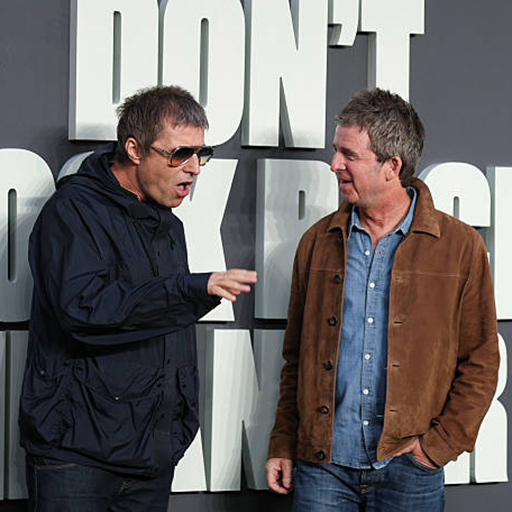
Even Noel Gallagher acknowledged the moment, saying that “Wonderwall belongs to the people” after seeing the players and supporters singing it together.
And that may be the most interesting part of the story.
There was no new release. No remix. No major promotional campaign. No anniversary reissue driving the numbers.
A song released in 1995 was simply placed in a new context — thousands of England fans singing together after victories on the other side of the Atlantic — and the audience followed.
For a song that has spent three decades as one of the most recognisable tracks in British music, “Wonderwall” has somehow found another life. And this time, it came with a football shirt.
Not officially England’s anthem. But for the summer of 2026, it certainly sounded like one.
Photo credits: Michael Spencer Jones